
Where are they and how are they being used by local law enforcement?
By Abigail Roberts
These are questions that many citizens are asking as the use of Flock Safety cameras has rapidly increased across the nation in recent years.
According to the company Flock Safety, there are over 120,000 active cameras deployed in more than 5,000 cities. The rise of surveillance cameras being used by law enforcement has spurred an ongoing debate about privacy versus safety.
Locally, both the Stanford Police Department (SPD) and the Lincoln County Sheriff’s Office (LCSO) use Flock cameras in local law enforcement operations.
The Lincoln County Daily News requested the location of Flock cameras from both departments, as well as information on how they are used and what safeguards are in place to prevent abuse of the system. Both agencies immediately responded to the requests and provided the information that was requested.
Both LCSO and SPD acquired Flock Safety cameras in 2025.
According to Police Chief Zach Middleton, SPD has 4 stationary Flock cameras in Stanford in the following locations:
• U.S. Hwy. 150 West at the city limits;
• U.S. Hwy. 150 East and Cordier Lane;
• U.S. Hwy. 27 North at city limits; and
• U.S. Hwy. 27 South at Yates Road
The 4 cameras are positioned on the 2 main highways in the city limits to capture traffic coming into or out of Stanford.
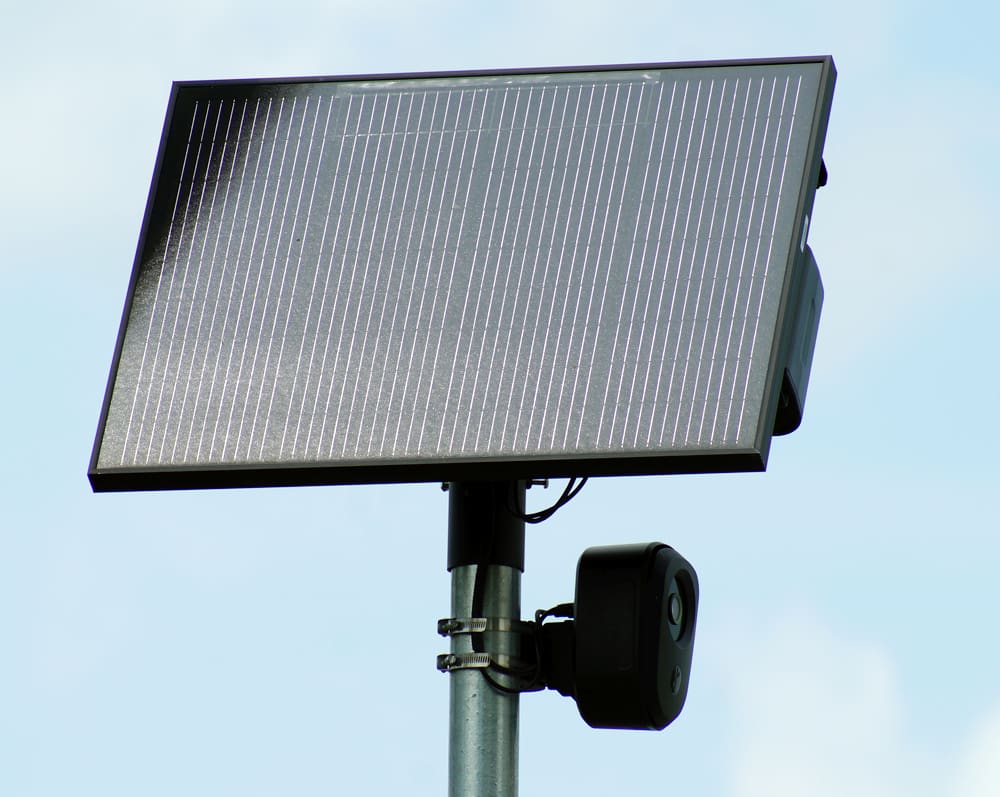
Middleton said SPD also has a portable Flock camera that is currently set up on Main street in front of the police station.
“This camera is portable meaning we can set it up in different locations that may be experiencing above average or repeated criminal activity,” Middleton said.
Lincoln County Sheriff Shawn Hines said the LCSO has two Flock cameras located on U.S. 127. Hines said the department chose to place them on the west side of the county since SPD has theirs in place on U.S. 27 and U.S. 150.
How are Flock cameras being used in LC?
LC Sheriff Shawn Hines said the department began researching Flock cameras a couple years ago in response to a missing elderly man from the Moreland area.
The man was located in Tennessee as a response to hits on Flock cameras in that area, Hines said.
“Since serving as Sheriff we have directed funds that assist in investigations such as Flock and LEADS Online,” Hines said. “The first weekend utilizing LEADS Online we recovered two stolen trailers.”
Hines said Flock cameras have assisted LCSO in determining direction of travel for perpetrators involved in domestic violence, stolen vehicles, and AMBER and Golden Alerts.
“Many times the first hour of an investigation is vital in our investigations and the Flock cameras have been beneficial in getting justice and providing a peace of mind for victims,” Hines said.
While many argue the Flock cameras are an invasion of privacy and have the potential for abuse or misuse by law enforcement, Hines said the system requires an investigative reason for the search and also saves each deputy’s search history and the investigative justification for each search.
SPD Chief Zach Middleton said he understands the concerns about privacy.
“I don’t want people tracking my every move either and if that’s what this system did and was designed for, I wouldn’t want any part of it, but I do think there are some misconceptions out there,” Middleton said. “One of the main misconceptions I’m seeing is that they are an invasion of people’s privacy, that they are being used to track people’s everyday activities, and that law enforcement agencies are constantly watching.”
Middleton said that is not how the cameras are being used by law enforcement.
“They’re there to help law enforcement find vehicles, locate missing children, identify or locate suspects in serious crimes and ultimately protect the people of their community in specific circumstances and on a case by case basis,” he said.
SPD Officers are not sitting around watching a screen looking at every vehicle that comes through town, he said.
“We only use the system for what it’s designed for – our officers have to have a valid, legitimate reason tied to an investigation or incident and we have the policies and procedures in place to ensure that is done properly with the law and people’s rights in mind,” he said.
Middleton said one of the reasons he is in favor of using the Flock cameras is for public safety, specifically regarding armed and dangerous suspects who may enter the area and put the community at risk.
“If there is someone from another county at large who is armed and dangerous and has been involved in something violent, I want to be able to know if that person has been or is coming into our community so that we can do all we can to keep our citizens safe,” he said.
According to the police chief, Flock cameras are designed to help law enforcement investigate crimes. They automatically capture images of vehicles traveling on public roadways. The cameras can help identify information such as: license plate numbers, vehicle make and model, vehicle color and distinguishing characteristics such as roof racks, decals, or damage.
Middleton said the information allows officers to quickly identify vehicles connected to crimes such as: human trafficking investigations; stolen vehicles; missing or abducted children; wanted violent offenders; robberies; burglaries; hit-and-run crashes; vehicle thefts; and drug-trafficking investigations.
“If an elderly person, mentally-ill person or child goes missing and a vehicle is involved, we can use that system to see which way they might have gone and it could be crucial to their safety and recovery,” Middleton said.
To combat the potential for abuse, Middleton said there are strict policies, statutes and restrictions in place.
Kentucky regulates automated license plate reader (ALPR) systems—commonly known as Flock Safety cameras—under House Bill 58, which went into effect on July 15, 2026.
The law requires– license plate reader data to be destroyed after 90 days, unless it is connected to a criminal investigation. The statute also bans the selling of information gathered by the readers.
Flock data alone is not enough to enforce anything, Middleton added.
“The data or results from Flock aren’t used as evidence by itself,” he said. “Any information it provides must be verified and supported by additional evidence from other sources of an investigation. It’s just one piece of the puzzle we could potentially use.”
Middleton said law enforcement is entrusted with a great deal of responsibility and it’s important that they have the tools they need to do their jobs effectively.
“At the end of the day if one of these cameras helps us get a dangerous criminal off the streets, recover a stolen vehicle or bring someone’s child home safely, then it’s done exactly what it was intended to do,” he said.
